The City of Rochester's Forestry Division is taking a proactive effort to protect Rochester’s urban forest from an invasive species called the Emerald Ash Borer.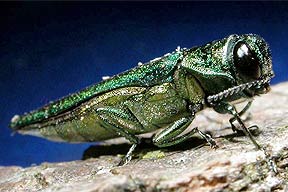
What is the Emerald Ash Borer?
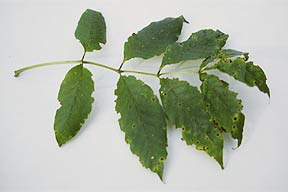
The Emerald Ash Borer (EAB) is an exotic beetle that was imported accidentally into the United States on packing material that originated in Asia. EAB larvae feeds on the inner bark of ash trees, disrupting the tree's ability to transport water and nutrients. The EAB has already killed tens of millions of trees in the states where it has been detected. Other than New York, the beetle has been detected in 21 other states including Illinois, Indiana, Kentucky, Maryland, Michigan, Minnesota, Missouri, Ohio, Pennsylvania, Virginia, West Virginia, Wisconsin, Colorado, Connecticut, Georgia, Iowa, Kansas, Massachusetts, North Carolina, Tennessee, New Hampshire as well as Ontario and Quebec Canada.
Has the Emerald Ash Borer been detected in the City of Rochester?
Forestry Division personnel discovered the EAB in and around Upper Falls Park on St. Paul Street in Downtown Rochester in June 2011. Seventeen ash trees in the area were infested at that time. A larger EAB infestation was detected in other parts of Monroe County (specifically, Scottsville) in 2010.
 Has Rochester done an inventory of its ash trees?
Yes - there are 3,604 ash trees in the City of Rochester's right of way (tree lawns) and in city parks.
How is Rochester treating ash trees that are in good condition?
Ash trees that are in good condition with an highly effective insecticide called "TREE-age." Forestry crews inject TREE-age directly into the tree’s vascular system through several plugs that seal it inside the tree. The initial treatment was expected to protect the tree for a period of two to three years.
Forestry crews retreated the City's ash trees in 2014; 3,604 ash trees were treated, including 3,372 street trees and 232 park/cemetery trees over the course of 13 weeks.
How is Rochester treating ash trees that are in poor condition?
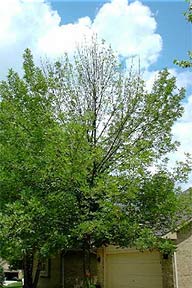
Ash trees in the poorest condition are poor candidates for treatment and are most vulnerable the EAB's effects. The Forestry Division identified and removed 900 ash trees in anticipation of their infestation.
 Will ash trees that are removed be replaced?
Yes. All ash trees that were removed have been replaced with new tree species that are not susceptible to EAB, unless an owner specifically asked not to have a new tree planted.
Helpful Links
What should I do if I still have questions?
If you have additional questions or suspect that an ash tree is dying, you can call 311 (outside of the city, call 585-428-5990) or call the Forestry division at 585-428-7581.