Introduction
The City of Rochester has completed the environmental cleanup of property at 62-64 Scio Street. The Project was being completed as part of the City of Rochester’s 2010 Brownfield Cleanup Grant from the United States Environmental Protection Agency (EPA). The Site, currently vacant and located in the City’s desirable East End District, is owned by the City of Rochester, and measures approximately 55 ft X 200 ft (~0.25 acres).
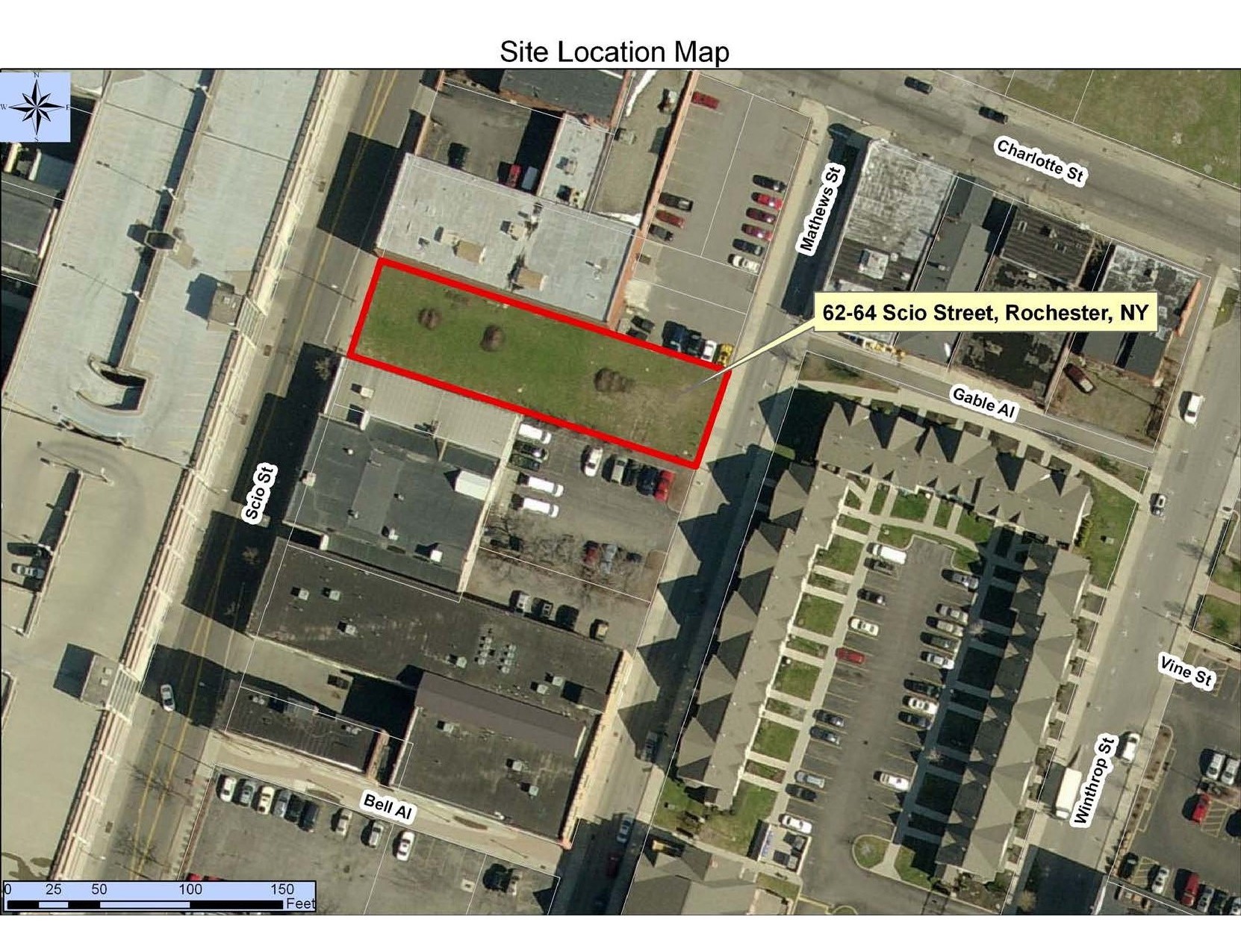
Background
Formerly, a 22,000 square foot, two story, brick building constructed around 1920 occupied the Site. The building was mainly used as a warehouse from the date of construction, until approximately 1990. The City of Rochester took ownership of the property in 1996, and it continued to be used as a storage until it was demolished in November 2002. The Site has remained vacant since demolition.
Underground Storage Tank Removal & Cleanup
Several environmental investigations were conducted from 1995 to 2012 in order to evaluate Site conditions and to strategize the cleanup approach to better position the site for future redevelopment. As part of the cleanup, a petroleum underground storage tank (UST) was excavated and removed from the Site and approximately 30 tons of petroleum impacted soils were removed from the tank excavation. Subsequent investigations were completed to evaluate petroleum impacts in the groundwater at the Site.
An Analysis of Brownfield Cleanup Alternatives (ABCA) was completed in June, 2012 by the City, which compared the feasibility of various remedial strategies for Site cleanup. Ultimately, targeted source soil removal and active groundwater remediation was selected as the best remedy. Approximately 1,400 tons of contaminated source soil was removed from the site in August, 2013 followed by a period of active groundwater treatment from June, 2014 to September, 2015.
In 2018, the City was issued a “No Further Action” letter from the New York State Department of Environmental Conservation and the Site was approved for commercial and mixed use redevelopment. The City is currently reviewing proposals for the redevelopment of the Site in the near future.
Further Information
More detailed information regarding the City’s Brownfield cleanup efforts at this site can be found in the following list of documents:
If you have additional questions about the project, contact the City’s project manager:
Jane MH Forbes, MPA, Sr. Environmental Specialist, Division of Environmental Quality, 30 Church St., Room 300 B, (585) 428-7892 or email her